
How Catamaran built one source of truth on AtlasFive® and deployed EtonAI™ on top
How did Catamaran institutionalise its family office? Catamaran built one source of truth on AtlasFive® before it deployed any AI. It moved decisions from conversation to data, defined its processes, and reduced its dependence on any one person. Only then did it put EtonAI™ to work on top of that record. Every choice was tested against one horizon: 100 years.
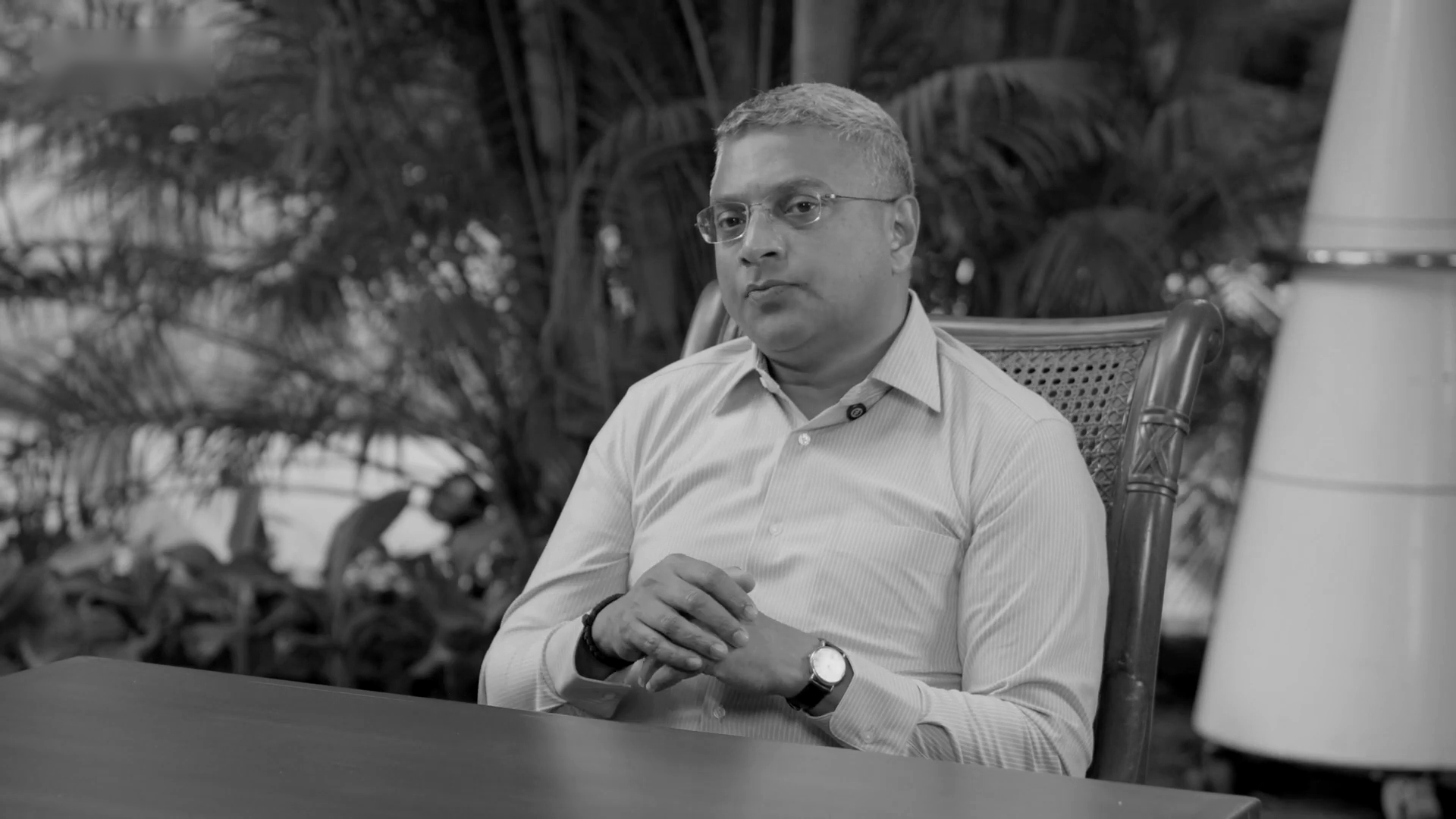
In this Eton Solutions Fireside Chat, Deepak Padaki, President of Catamaran, and Rob Mallernee, Founder and CEO of Eton Solutions, joins Bryan Henning, President of Eton Solutions, to discuss how leading family offices are moving decision-making “from the dinner table to the boardroom.”
They also discussed what it takes to run a family office like a professional firm, and why the order of the work matters as much as the work itself. Catamaran didn’t start with AI, it started with its data – this is their story.
Why build a family office for 100 years?
Most family offices are built around the generation that founds them. The principals know the history, the advisers know the principals, and the numbers live in a mix of spreadsheets, statements and memory. It works, until the people change.
Catamaran set itself a longer test. As Deepak Padaki puts it in the conversation: “How do I make this live for 100 years?”
That question changes what counts as good enough. An office designed to outlast its founders cannot run on relationships and recall. It has to run the way a professional firm runs: With documented processes, consistent data and decisions that can be traced back to their inputs. The goal is not bureaucracy, it’s continuity and an office that always works the same way, regardless of who is in the room.
Rob Mallernee frames the same risk from the operating side. Succession is usually discussed as a family matter, but also an operational one. When a critical process, relationship or data set sits with a single person, the office carries a governance risk that no policy document removes. His answer is blunt: “Nothing should live in one person’s head.”
What does it mean to move decisions from the dining table to the system?
In many family offices, important decisions still start at the dining table. Someone brings a view, someone else brings a number, and the conversation settles it. The judgement may be sound but the problem is that no one can see a track record of the decision was based on after the fact. So, the next generation essentially inherits the outcome without the reasoning.
Catamaran’s shift was to make decisions on data, with defined processes. In practice that means three things:
-
The office agrees on one set of numbers
-
It writes down how work gets done and who owns each step
-
And it keeps the record in a system the whole office uses, rather than in individual files.
The first of those is the hardest, and Deepak is clear on why it cannot be skipped: “You can’t have two reports showing two different pieces of data.”
Two reports that disagree do more damage than a missing report. They turn a decision meeting into a reconciliation exercise and quietly erode trust in every number that follows. A single source of truth is what allows family members to argue about the decision, instead of the data.
Why did Catamaran build one source of truth before deploying AI?
Because AI is only as reliable as the record it works on. Catamaran approached the work in three stages, each one making the next possible.
-
One record on AtlasFive®. Bring the office’s entities, accounts, holdings and documents into a single platform, so there is one version of every number.
-
Defined processes on that record. Standardise how data comes in, how it is checked and how it is reported, so the output is the same whoever runs it.
-
EtonAI™ on top. With a trusted record and consistent processes in place, deploy AI to work across that data, inside the same governance.
The order matters. AI needs a context layer, which often looks like a complete, consistent view of the family’s structures and assets that tells it what the data means. Deployed on fragmented data, AI does not fix the fragmentation – it works faster on top of it, and the inconsistencies travel further.
This is the pattern Eton sees across the families on AtlasFive®. Offices that adopt AI well almost always do so because the platform underneath was ready. AtlasFive® holds the record; EtonAI™ works on top of it.
How should a family office govern AI?
The same way it governs people. Rob’s principle in the conversation is that every AI agent inside a family office should be governed as tightly as every person: clear permissions, clear limits and a record of what it did.
For a family office, that principle rests on architecture, rather than promises. EtonAI™ runs inside the security model of the office’s own AtlasFive® environment:
-
Single-tenant instance. Each family’s data sits in its own isolated environment. The AI working on it cannot see any other family’s data.
-
Bring Your Own Key (BYOK) encryption. The family holds its own encryption keys, not Eton Solutions.
-
No cross-client training. Client data is never used to train models that serve other clients.
-
Human approval where it counts. Irreversible actions, such as outbound payments, need an authenticated human sign-off.
-
A full audit trail. Every action by a person or an agent is logged and attributable.
Eton Solutions is one of the first companies in wealth management globally to earn ISO 42001 certification for AI Management Systems, alongside SOC 1 Type II, SOC 2 Type II, ISO 27001 and ISO 27701. That independent verification is what lets a family office show its board that AI is being used responsibly, rather than simply assert it.
This is where the single source of truth pays off twice. The same record that makes AI useful also makes it governable. One system, one set of permissions, one audit trail.
Is this level of structure overdoing it?
Defined processes, a single platform and formal governance can look heavy for an office that already works. Judged over one reporting cycle, the effort can seem out of proportion to the problem. What settled it for Catamaran was changing the timeframe. Looked at over ten years, through changes in people, entities, advisers and generations, the structure stops looking like overhead and starts looking like the thing that keeps the office working.
What does Catamaran’s approach mean for other family offices?
The bar has moved. As Deepak puts it: “Managing existing portfolios is table stakes.”
Keeping accurate books, reporting on time and paying bills correctly is now the minimum a family expects. The offices that will stand out are the ones that can also support better decisions, and that is only possible on a record everyone trusts.
For a family office considering the same path, Catamaran’s sequence offers a practical order of work:
-
Test decisions against a long horizon, not just the next quarter.
-
Treat person dependency as a governance risk and document what lives in people’s heads.
-
Build one source of truth before adding AI.
-
Govern every AI agent as tightly as every person.
Catamaran’s own plans for AI remain Catamaran’s. The lesson for everyone else is the order: data first, then AI.
Get the full Catamaran story
The full case study sets out how Catamaran moved through each stage, from one record on AtlasFive® to EtonAI™ on top. The full 38-minute conversation between Deepak Padaki, Rob Mallernee and Bryan Henning covers succession, data trust, governance and the 100-year view in their own words.
Download the case study for the complete account of Catamaran’s staged approach.
Watch the full interview for the whole 38-minute conversation.
Known contacts skip the form via HubSpot smart content. After submitting, the thank-you page delivers the case study PDF, the full conversation and the next step: Book a private session with the Eton Solutions team.
About Eton Solutions
Eton Solutions, L.P. operates AtlasFive®, the integrated wealth management platform, and EtonAI™, its autonomous AI layer for family offices. The platform currently serves 1,173+ families across 15 countries, with client wealth ranging from $50 million to $100 billion in AUM, and $1.59 trillion of assets on platform. Eton Solutions is one of the first companies in wealth management globally to earn ISO 42001 certification for AI Management Systems, alongside SOC 1 Type II, SOC 2 Type II, ISO 27001 and ISO 27701.
Learn more at eton-solutions.com.
