



2023: Time for a Resilient Family Office

Resilient = Adaptive

Psychologists define resilience as the process of adapting well in the face of adversity, trauma, tragedy, threats, or significant sources of risk. For family office’s, the need to adapt intensified with the pandemic and will be ongoing through a potential recession in 2023/2024.

An all-encompassing view of the affairs of the family is the raison d’etre for a family office. The family office provides a wealth owner with one place to get answers about all assets and liabilities, with a dedicated team of professionals to interpret and analyze data and provide exceptional service.

The Resilience Problem in Family Offices

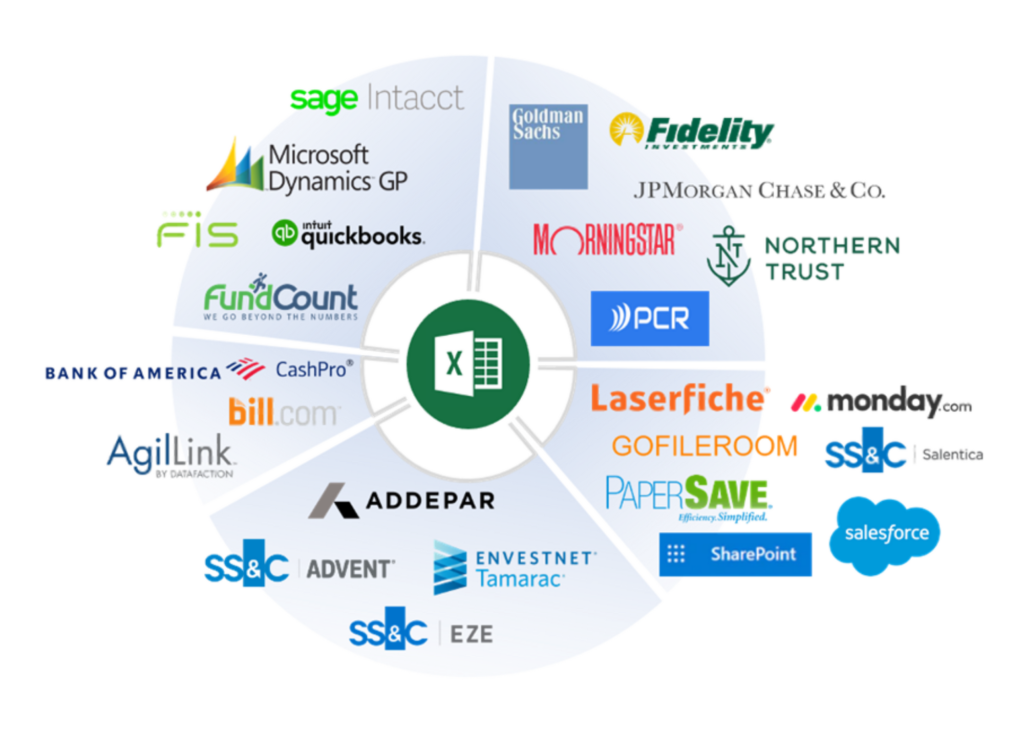
However, there is a resilience problem in many family offices. Family offices do not typically have an enterprise-focused strategy and an accompanying operational structure. Data gathering and data entry are usually manual work. Most family offices rely on spreadsheets and general ledger software. Even where more sophisticated technology is used, it is typically not integrated. Reconciliation and data checking is done “at the back end” when reports are created. Reporting cadence is, at best monthly, but more likely quarterly or annually (and often in static pdf or paper).

These problems exist at all levels within the office, down to areas like business continuity and disaster recovery. COVID-19 demonstrated that remote working is a challenge for family offices due to a variety of reasons, from office culture to disparate data sources and manual business processes.

Meeting the Resilience Challenge

What will be the most important areas of focus for family offices in 2023? They will be in areas that are critical to decision-making.

Among the key issues facing family offices is reporting because it is so complicated and because for many reports, an Excel spreadsheet is the data aggregator and source of the report. It is with reporting that the dimensions of complexity that a family office must deal with come into play. There are multiple information hierarchies that operate both independently but also in tandem.

These information hierarchies include:

  • Asset complexity, where asset types vary widely in the efficiency of the operational processes involved in their trading, valuation, and performance measurement
  • Family complexity around the branch, generational, and ownership structures; there is a progression where owning legal entities are single, multiple/grouped, and tiered/recursive
  • Type of investment activity

As a result, the list of spreadsheets that are core to the ongoing operations of a family office is significant and complex.

These spreadsheets include:

  • Direct equity valuation
  • Alternative investments contacts, reports, and analysis
  • Deal sheets
  • IRR workbook and modeling
  • Capital commitment workbooks
  • Cash flow projection workbooks
  • Marry-up pricing partnership tiers
  • Cash receipts and wires activity
  • Pooled cash workbooks
  • Asset allocation and reporting
  • Tax basis asset tracking
  • Tax data estimates and adjustments
  • Recording and allocating K1 data
  • Notes payable: interest accruals and amortization
  • Property tracking/recording
  • And so on…

A family office needs to move away from this sort of approach if it is to become the modern, resilient office its family needs and the next generation will expect. So, how does a family office get as much timely data as it can, automatically turn that data into informative reports, and facilitate adaptive thinking and wisdom?

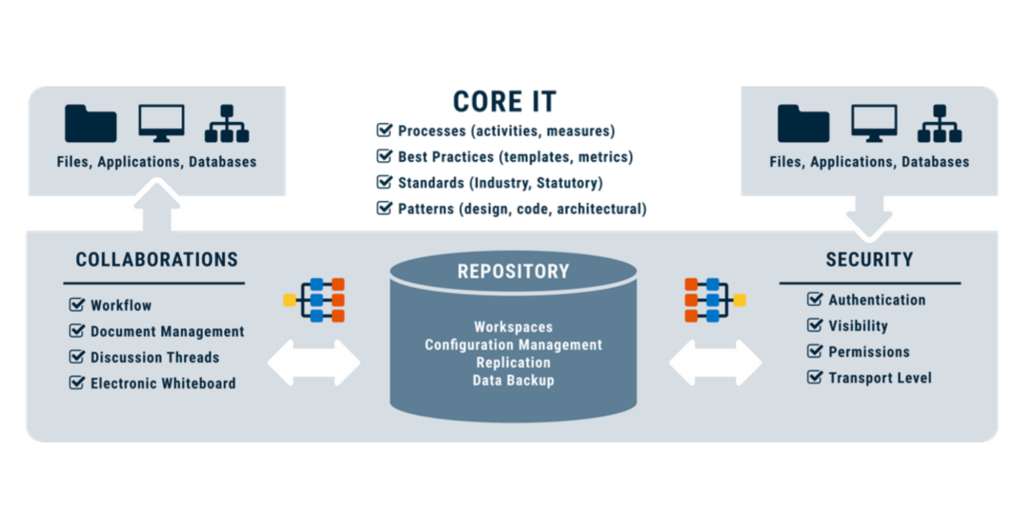
The facilitator of change is a modern, integrated technology platform that has a built-in operations model for a family office. Using this approach, an office will get the key elements it needs to be resilient during any crisis. These crucial elements include:

Data

  • Access to daily data wherever possible
  • Pricing/valuations for non-marketable assets as current as possible
  • Ability to normalize and standardize data no matter the source
  • Stored data that uses a relational data model built for family office operations

Information

  • Ability to consolidate and aggregate data for all assets and liabilities at every entity level
  • Multiple, overlapping data hierarchies
  • Tools to ‘slice & dice’ data across all dimensions

Knowledge

  • Ability to produce a daily report of true net worth
  • Ability to produce a daily report on cash flows
  • Interactive reporting capabilities through software like Power BI

To quote Ram Dass: “Information is just bits of data. Knowledge is putting them together. Wisdom is transcending them.” The right technology platform for your family office can manage the bits of data and put them together meaningfully so that your office staff members are free to use their wisdom to transcend them and propel your family office into the future.

The AtlasFive platform was developed by, and specifically for, a family office by a highly experienced development team building toward a clear vision of the Family Office of the Future. From the beginning, the focus has been data-first. AtlasFive is the only truly integrated platform for single and multi-family offices. It is designed to revolutionize the management, data security, and operations of family offices and facilitate the implementation of best practice business processes and workflows across multiple disciplines to help maximize the real benefits of a data-first approach.


Is Your Family Office Software Obsolete? How To Tell

All family offices rely on software to help run their operations. While many of these packages are routinely updated, they may no longer meet the needs of a modern office. What makes software obsolete? Gartner describes obsolete software as “an information system that may be based on outdated technologies, but is critical to day-to-day operations.”

Why care? Outdated software presents major issues for family offices and their clients, including:

  • Low productivity due to unreliable software performance
  • Data loss when the software fails
  • An easy avenue for cybercriminals

Signs your family office software is obsolete

So how can you tell if your current software is (or is about to become) obsolete? These are some of the warning signs that your software isn’t good enough for your current needs:

Staff often resort to manual processes.

If your office is bogged down in manual tasks that could be automated, you have a problem. The primary purpose of software is to take a manual process and either automate it or make it easier. If your software isn’t doing this, it’s a red flag because it results in low productivity and inefficiency.

Your needs have changed, but the software hasn’t.

A family office needs to be adaptable. It must be able to act quickly in many areas, as family dynamics, needs, and investments change. Software that restricts and hinders change is a problem.

The main function of the software isn’t working properly.

If it feels like a software package’s main function isn’t being accomplished fully or efficiently, it is a sign that your software is obsolete.  

The software is noticeably slower.

This is a clear sign that the life of the software is ending. The potential for data loss is heightened. It can also be a sign that a cybersecurity breach has already occurred, and you have an even bigger problem.

The software has gone years without an update.

If it’s been more than a year since the last update was issued, it may mean that your software program is no longer secure, and it could be the reason the aforementioned problems occurring.

Why does obsolete family office software matter?

In a family office, old software is often no longer “fit for purpose.” High-value office staff are stuck performing unnecessary and cumbersome tasks because their key software tools, such as Microsoft Excel and QuickBooks, are siloed and unable to perform critical processes from end to end. 

An example would be an office using a software program that wasn’t designed for private equity investments but has been jerry-rigged for that purpose by relying on manual processes and spreadsheets. The staff needs to make heroic efforts to get the transactions and the reporting right. What would the office gain if these people could move away from obsolete software and have an integrated technology platform instead?

Choosing an upgrade

With better technology, most family offices can become a better version of themselves and provide greater value to the family or families they serve. The transformation would result in improved efficiency, risk management, effectiveness, and responsiveness, and a more robust offering of analytical services. A family office typically has great, dedicated, and talented people. If one single technology platform could provide the enterprise-class processes, reporting, automation, and client delivery capabilities they need, they could really be in the business of managing the family’s wealth effectively.

The right software platform can revolutionize the management and operation of single and multi-family offices. A truly integrated platform can facilitate the implementation of best-practice business processes and workflows across multiple disciplines. It can enable a key goal, transparency, where “complexity is made simple” and where there is one source of the truth. 

Why? A purpose-built, enterprise software platform will enable efficient, timely, and accurate reporting to drive improved decision making, while ensuring that family data is truly secure. It can provide the client with 24/7/365 anywhere access to reporting and secure communications. The end result is what clients want: a highly engaged staff delivering excellent, timely reporting and service execution that is driven by automated, integrated best practices to provide best-in-class risk management.

What does this mean day-to-day for the family office staff? It means having all the information (documents plus accurate financial transaction information) in one place to do planning (cash, estate, tax, investment, insurance, etc.).  It means the office has a truly strategic solution that provides all the information to coordinate tasks and solve problems ahead of time.

What matters in choosing family office technology?

As your office looks to upgrade its software with the right platform for the family office of the future, there are several critical characteristics it should pursue.

  • A solution that addresses the unique challenges and processes of your business, a software platform purpose-built by a family office for family offices
  • An integrated application suite for entity management, data aggregation, investment reporting, general ledger, transaction initiation, trust, and tax accounting
  • Business process and role-based workflow functionality
  • A single source of data and truth
  • The highest levels of security

Many family offices are trying to bring their technology infrastructure into the 21st century. Unfortunately, the market was slow to provide a way forward.  Eton Solutions is a next-generation, end-to-end technology platform built specifically to meet the challenges of a modern family office and emphatically solve the software obsolesce problem.

A Self-Driving Family Office?

Family office technology and automation

Along the technology journey toward automotive automation and self-driving cars, experts frequently talk about five levels of automation, ranging from no driving automation whatsoever (Level 1) to full driving automation (Level 5). Today’s family offices might think about a similar spectrum when considering where they are in harnessing the power of automation to improve the way they get from here to there.

We may not have flying cars already like Back to the Future led us to expect, but surely we’ll have regular self-driving cars soon, right? It seems like that topic is a common headline in automotive news lately. However, the reality is a little different, as explained in this Forbes article:

“Despite the hype that liberation day will dawn soon, and cars will drive themselves, there’s no realistic chance that full-on self-driving will be available before 2030, and then only in a tiny number of top-of-the-range sedans and SUVs, according to consultancy Accenture.”

Level 5, according to the article, is a state of automation that assumes control by a computer with no steering responsibility for humans.  And that level of total control is still some time away: “A L5 system that can drive from door to door in the whole of Europe and North America at least, for at least 80% of all itineraries and with 0 accidents and disengagements” is at least a decade away, researchers say.

What does this have to do with a family office?

When you zoom out and look at the big picture, all cars do essentially the same thing, but other considerations determine the make and model you buy. One factor could be the degree of self-driving, and a more fully automated self-driving car may imply a higher-value luxury car.  And yes, Rolls Royce has a self-driving concept car.  Of course, the other option is a Rolls Royce with a chauffeur!

So what’s the analogy with family office operations? 

Business operations in a family office revolve around processing data and information, moving it through various defined processes to achieve the desired outcome. It’s analogous to driving a car from point A to point B, obeying all road rules in the most efficient way possible while avoiding potential obstacles and problems. Is it easy to see the benefit of a “self-driving family office”?

Implementing fully integrated automated processes

In most family offices today, the core problems to be overcome are the lack of an integrated technology system and the resulting reliance on manual processes and procedures.  To use the self-driving car analogy, these family offices are at Level 1 or 2, at best. They’re relying on humans to do almost everything in their offices.

Is self-driving possible in family office operations?  Yes, and you do not have to wait until 2030.

Depending upon the business process and workflow, Level 5 is attainable.  Fully integrated family office software is at the pinnacle of family office technology. This next-gen tech provides a platform that automates the business processes and workflows behind transactional work. This enables family office professionals to focus on data-driven analysis, recommendations, and decision-making — what all family offices should strive to achieve.

Benefits of adopting an integrated platform

Here’s one example of how an integrated platform can help family offices automate critical processes and improve accuracy: Say that a custodian incorrectly enters a digit for a capital call transaction and sends the wrong amount. The exception reports that an integrated platform can automatically generate will catch the mistake the same or the next day, allowing the error to be rectified quickly and with minimal impact on operations, instead of the mistake going unnoticed for potentially weeks (or not at all).

Another way that next-gen tech can immediately improve efficiency in a family office is through automated reporting. In many family offices, data is siloed, and creating a unified, holistic report to share with family members and stakeholders can take staff days to produce. At the same time, they cross-check spreadsheets and compile them. This is both time-consuming and mistake-prone. Fully integrated platforms centralize all the information so that data is quickly compiled into customizable, interactive reports that can be automatically generated. This automation frees staff to perform higher-value tasks, improves accuracy, and reduces risk. Just like the Level 5 self-driving car of our dreams!

AtlasFive: The family office software of the future

We might wait more than a few years for a car that drives itself while the “driver” naps or reads, but the future is now for family offices. Take advantage of all a fully integrated technology platform, like AtlasFive, can do for your team. A family office leveraging existing technology, like the coming Level 5 automobile, can drive itself. Imagine what your family office can achieve with its own personal chauffeur and a fully automated self-driving platform.

Creating a Best-in-Class Client Experience in your Family Office

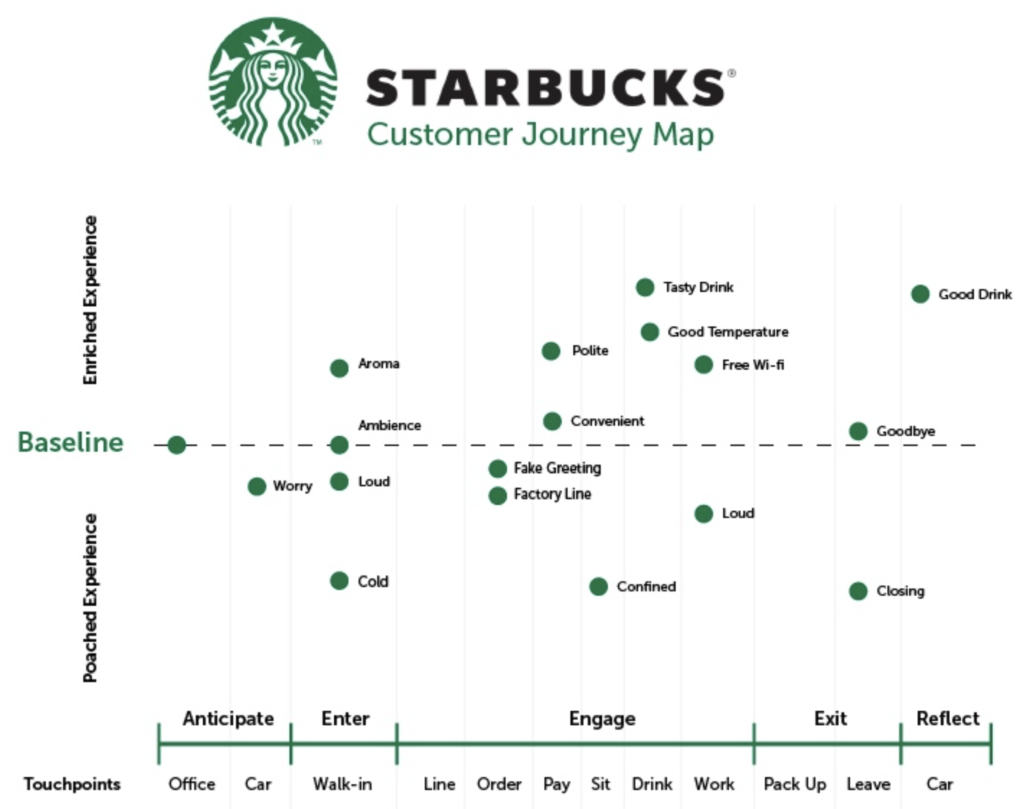
When it comes to elevating the “customer experience” to improve client satisfaction and results, today’s family offices could learn a thing or two from Starbucks.

Starbucks has succeeded in turning the coffee buying process into a highly consistent, satisfying experience they can charge a premium for. The company created its experience using an integrated platform, customer journey mapping, common business processes, and a detailed set of workflows that are consistently executed to deliver on the Starbucks promise – setting a new standard in the coffee business.

Of course, the workflows and business processes within a family office are often highly complex and the expectations of clients are not always predictable. No matter how well we craft an experience, a client may not perceive it exactly as we anticipate or hope. Yet, offices cannot afford to throw up their hands and give up in the face of unpredictability. Instead, the axiom “to plan for the worst and aim for the ideal” is appropriate when considering the experiences your office wants to create.

Client experience is the sum total of how your office engages with its family members, not just during specific types of interactions or snapshots in time, but throughout the entire day-to-day cycle of client-office engagement. Sometimes people think of customer experience as emanating from digital interactions, such as on a website or a smartphone. In other cases, client experience is focused on client service delivery or the speed and manner in which problems are solved. To be really successful on a long-term basis, client experience needs to be seen as all these things, and more.

What Family Offices Can Learn From Starbucks

Family Offices can achieve the same efficiencies and valued client experiences as Starbucks by closely examining the critical daily tasks they perform and transforming them into well-documented, systematized processes for consistent, best-in-class service delivery. Adding workflow automation to minimize steps that must be performed by people will help ensure that consistency. And providing a multi-channel client experience that allows family members greater convenience and choice in how they engage with the office will also improve efficiencies and satisfaction.

Automation And Integration Are Key

For most family offices, there have been two missing links in achieving highly consistent and satisfying client experiences: the automation of client service workflows, and the integration of essential applications and services, such as an effective client portal, CRM, document management, portfolio management, financial planning and corresponding systems/data from custodians.

Proactive, Not Reactive

Through the creation and automation of client service processes and workflows, family offices can create an efficient foundation to adapt and scale services without adding staff. They can do more for clients without working harder and become more proactive rather than reactive. They can build fiduciary and compliance steps into the workflow so these steps are completed correctly each and every time. And they can alleviate over-dependence on key personnel whose departure would otherwise create major disruptions.

Technology Is Essential

A report by McKinsey, entitled Transforming Customer Experience in Wealth Management, underscores the essential role technology can play in advancing customer satisfaction. “The ‘aha’ moment was realizing that the right question was “how can technology improve the relationship between clients and advisers? Not just speed up the process.” according to the report.

How can technology improve the relationship between clients and advisers? Not just speed up the process.

Analyze To Reimagine

Any real improvement in the client experience in a family office requires a bottom-up approach based on thorough analysis. That means drawing on all available data to build a genuine understanding of which parts of the client journey matter most to client satisfaction and then having the courage to reimagine the entire service model and the structures that underpin it.

How To Transform The Customer Experience In Your Family Office

To summarize a winning approach to transforming the customer experience in today’s family office:

Maximize front-office effectiveness: Concentrate on client-focused activities by providing the information and tools required to acquire, serve, and retain clients. Leverage advanced analytical techniques to reap the full value of both internal and external sources of data.

Create a seamless, multichannel client experience: Design efficient, error-free processes with low cycle times that minimize data loss and downstream re-work requirements. Manage multiple entry points into end-to-end processes that provide an efficient and effective multichannel client experience.

Utilize best practice business processes, workflow, integrated software, and services to ensure flawless delivery: Ensure consistency by establishing pools of resources focused on similar tasks. Strive for high automation levels, smooth workflow management, and a single primary source of client data.

Develop a transformation model and roadmap: Leverage operating models to maintain the integrity of risk management and compliance procedures. They reduce risk while increasing overall efficiency.

“Putting the client at the heart of the service experience” should be the family office essence. Every family office provides a client experience, regardless of whether you create it consciously or not. It’s up to you whether it’s exceptional, awful, or just industry average.

Points of Failure in a Family Office

Do family offices ever fail? Yes, they do. The reasons behind many failures involve family dynamics, in which generational and other differences create tensions and challenges. However, there is another major point of failure for family offices that is easier to correct—technology.

Why More Technology Means More Risk for Family Offices

Most family offices today have multiple, discrete systems with little or no integration. These include separate GL, Investment Reporting, CRM, Document Management, and Transaction Processing applications all being used within a single office. Hard-working office staff are often forced to use Excel spreadsheets and high-cost manual labor to link these data and applications together, creating major inefficiencies that are costly to the offices and the families they serve. These manual business processes are also subject to risk, human modification, and error. Each disparate technological application and process an office utilizes increases the likelihood of incorrect data impacting the office or family.

But for family offices, which can be seen as easy targets for cybercriminals looking to defraud an account, the risk goes beyond potential staff error leading to inaccurate information.

External bad actors can take advantage of vulnerabilities in an office’s technology to gain access to data or – even worse – client funds.

The lack of enterprise-level integration is fraught with danger in an era of mounting cyber threats. Many offices falsely believe they are protected if their system incorporates APIs (application programming interfaces). However, even if there is an API, there is no guarantee of security. In June, a company called Akamai released a survey report focusing on APIs, which it described as “the attack surface that connects us all.” Another survey this year, this one from Radware, finds that over 92% of organizations report growth in their use of APIs over the past year, but exhibit over-confidence in their approach to API protection. It is worth listing two of their findings. The first involves the threat of undocumented APIs (where the lack of visibility into an API presents an unquantified risk). Over 60% of respondents felt a third of their APIs were undocumented. The second problem is that API attacks are flying under the radar (many existing tools are simply unable to detect and protect against API threats and attacks).

Cybersecurity vulnerabilities caused by holes in family office technology infrastructures impact disaster recovery, business continuity, and the ability of an office to survive a focused cyber-attack. And the more disparate systems an office utilizes, the more opportunities a bad agent has to breach the system and wreak havoc.

Protecting the Family Office Against Technological Failure

The solution to this growing cyber risk is adopting a more integrated platform approach with a single database, where the potential points of failure (and vulnerabilities) are minimized – you only need to protect one system and can inherit cybersecurity.

If you also layer onto that approach a cloud-native architecture with the highest levels of end-to-end encryption (where you can own the “key”) and built-in business processes and workflows, you have the tools for a secure, enterprise-level technology base to support the family office.

The result? A platform that can meet all the family office needs:

Family offices need to replace their current technology infrastructures and utilize an integrated enterprise platform designed and built for a family office. Such a technology platform offers a dynamic workflow and process management engine to dramatically streamline and improve work processes while bringing a new level of risk reduction and cybersecurity. It’s an approach that promotes the success of the office and protects against a major point of potential failure.

Time is Money: Even in a Family Office

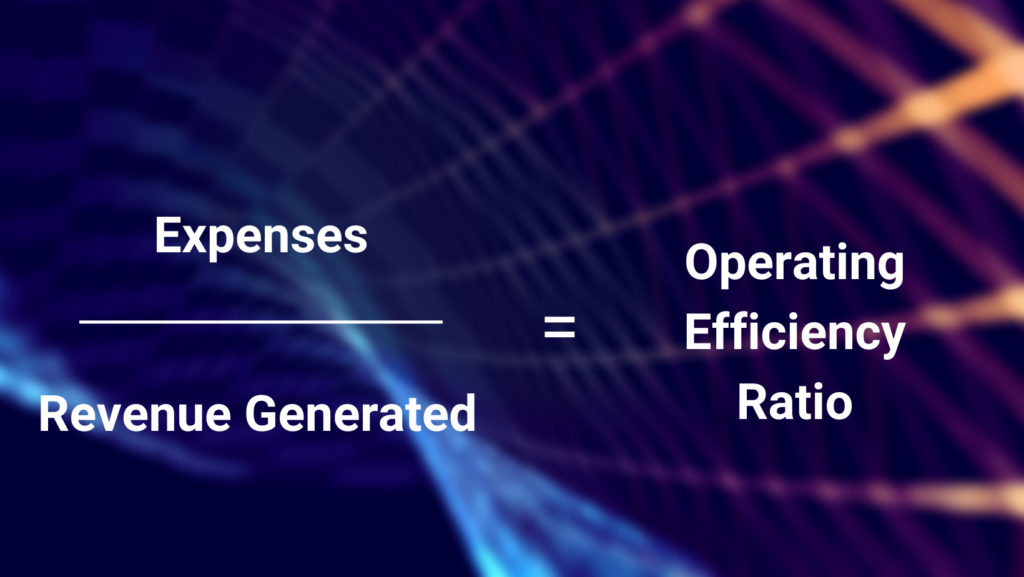
In business, it’s all about the bottom line. There are several factors that affect that bottom line, and an effective business leader will monitor them all. One of the most important measures is what’s called the operational efficiency ratio, also known as the indicator of the health of the business. The operating efficiency ratio compares the expenses to any revenue generated and obviously the goal is to have as low a ratio as possible—to be able to generate revenue in the most efficient way.

If the ratio is rising, or already too high, then the course correction is to make changes to business processes and the toolset available to the business to improve operational efficiency. This is the situation many family offices find themselves in right now. Although single family offices may not be operating for a profit, optimizing efficiency, expenses, and other resources is of utmost importance to the family and office leaders.

Staffing is Expected to Drive Rise in Costs

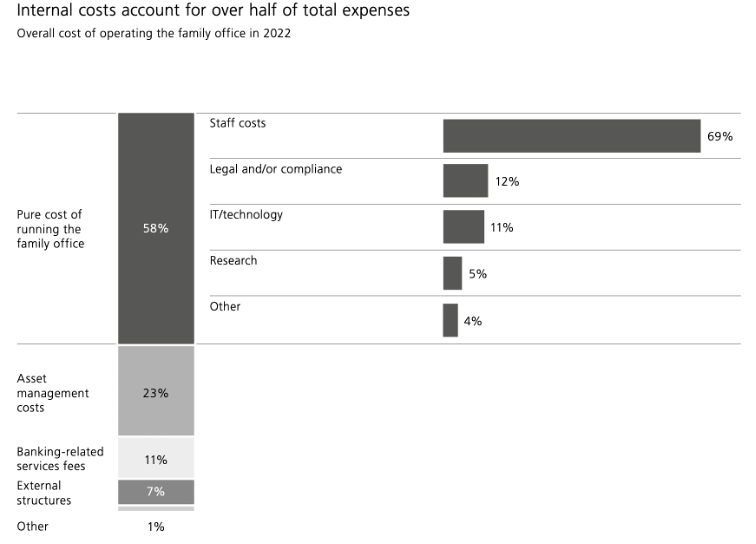
Family offices foresee rising costs over the next three years, with the greatest increases in staffing, their greatest area of overhead. In a recent survey, as shown below, more than half of offices (54%) expect staff costs – including hiring, salaries, and bonuses – to rise. Regionally, US family offices appear to face the greatest staff costs, with 80% expecting increases. Roughly two-thirds of Swiss (67%) and Middle Eastern (63%) offices have similar expectations. By contrast, survey respondents in Asia-Pacific (44%) anticipate less upwards pressure, and Latin America (22%) seems far less concerned about rising staff costs for family offices.

 (UBS GFO Report June 2022)

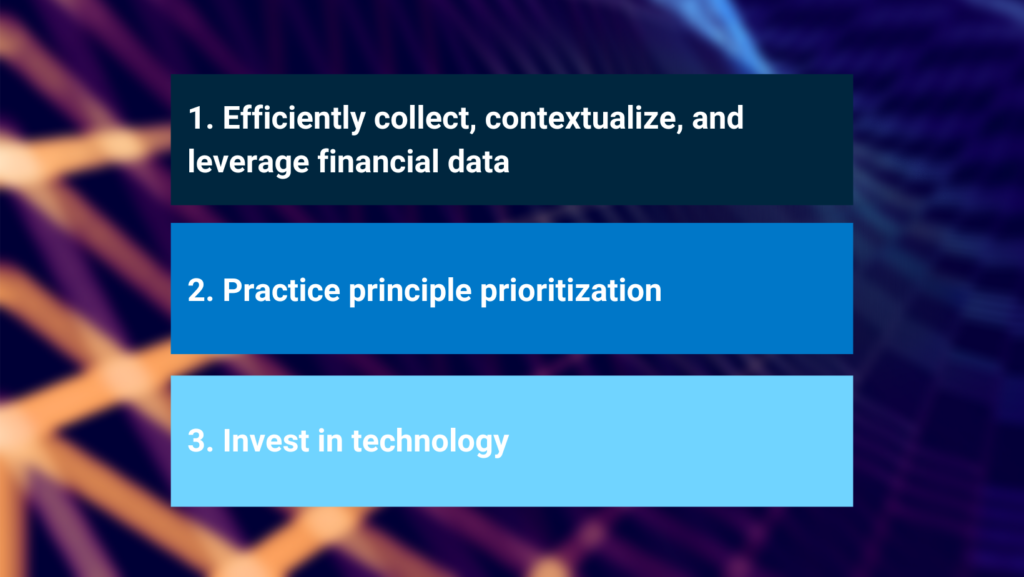
The cost of operating a family office has risen significantly, driven by salaries and wages, forcing offices to take actions they have long delayed. How should family offices proceed? Below are key areas they need to assess:

  1. Efficiently collect, contextualize, and leverage financial data
  2. A single source of data will help create data insights to streamline internal controls and workflows.
  3. Practice principle prioritization
  4. How does the 80/20 rule (80% of outcomes (or outputs) result from 20% of all causes (or inputs) for any given event) impact the office? Which 20% of the work really matters?
  5. Prioritization goes hand in hand with data collection and analysis, as a complete and clear picture can help you develop strategies to eliminate wasted time, effort, and talent. To streamline your workflows, implement continuous improvement methodologies, and analyze ongoing performance.
  6. Free-up resources and time to focus on things that produce maximum return on investment (ROI) for the family.
  7. Invest in technology
  8. Managing to capture, organize, and analyze your data, and then put the insights to good use, requires a robust set of tools.
  9. Implement a comprehensive family office software solution to give the office access to advanced data management and analytics, process automation, AI, and user experience.
  10. Gain full visibility into all your performance, compliance, spending, and other data generated by your business with a fully integrated, centralized, cloud-native solution.
  11. Eliminate disparate software environments to be able to work faster with more effective collaboration, communication, and strategic planning.
  12. Analyze data in real-time to generate fully customizable reports, forecasts, budgets, financial statements, etc.
  13. Streamline high-volume, low-value tasks through business process automation. This frees team members to apply their talents where they can generate the best return (while simultaneously boosting speed and enhancing performance and accuracy by eliminating human error).
  14. Integrate continuous improvement as part of an overarching digital transformation.
  15. Eliminate the expense and waste of paper-based, manual workflows, generating both immediate savings and long-term value.
  16. Establish, manage, and refine KPIs you can use in tandem with the operational efficiency ratio.

The approach outlined in the points above can significantly impact the ability of an office to efficiently and effectively manage the various processes, people, and systems that interact to deliver valued client outcomes.

They are also very interdependent, which is why operational efficiency changes are strategic and ongoing. Making change happen in a family office can be difficult and requires a catalyst. This is where choosing the right technology can automatically bring about the necessary changes around data and work prioritization.

Single family offices can fail. How an office structures and manages its operations is essential for delivering on the promise of a family office. A properly structured and maintained operational capability maximizes the client experience, in addition to realizing efficiencies and controlling costs.

Eton Solutions – The Family Office Software to Optimize Operating Efficiency

Eton Solutions built its AtlasFive® family office software specifically to address the complex needs of family offices and their clients. The solution integrates deep domain knowledge and best practices with best-in-class technology to better capture, manage and analyze data, automate time-consuming mundane tasks; eliminate errors and speed the time needed to generate accurate and trusted reports, forecasts, and budgets. It delivers true transparency, secure access to information, and greatly improved risk management. The result is greater productivity and better outcomes for the families that offices serve.

AtlasFive® is the right platform for family offices seeking to improve operational efficiency. It provides the only truly integrated platform for single and multi-family offices. It revolutionizes the efficiency of managing and operating these offices, and it meets and often exceeds the changing needs and expectations of the ultra-high-net-worth families being served.

Why the Right Family Office Software is Even More Important in a Sliding Economy

More than a few economists are now predicting a recession in late 2022 or in 2023. Then again, others say a downturn will be averted. Either way, most people think that a family office is well protected and would not be affected much by a recession. History says otherwise.

During the 2007-2008 recession, practically every family office took steps to minimize the impact of a deteriorating economy. The typical family office response entailed cutting costs, reevaluating ongoing expenditures, and modifying investment strategies and focus. These swift changes in strategy strain the family office and shift focus resulting in a loss in efficiency and effectiveness. Despite responding to the recession in many areas, an opportunity was missed.

A recession, or the possibility of one, should indeed be a driver for change. Family offices should use this volatile time as an opportunity to hedge against economic woes and find ways to become more efficient and effective—to add even more value to the family or families they serve. Reframing a recession as a chance to reposition the family office, reevaluate staff members’ roles, and identify more places to add value to the family shifts the perspective on a downturn from one of angst to one of opportunity.

Skilled Staff Limited by Siloed Software

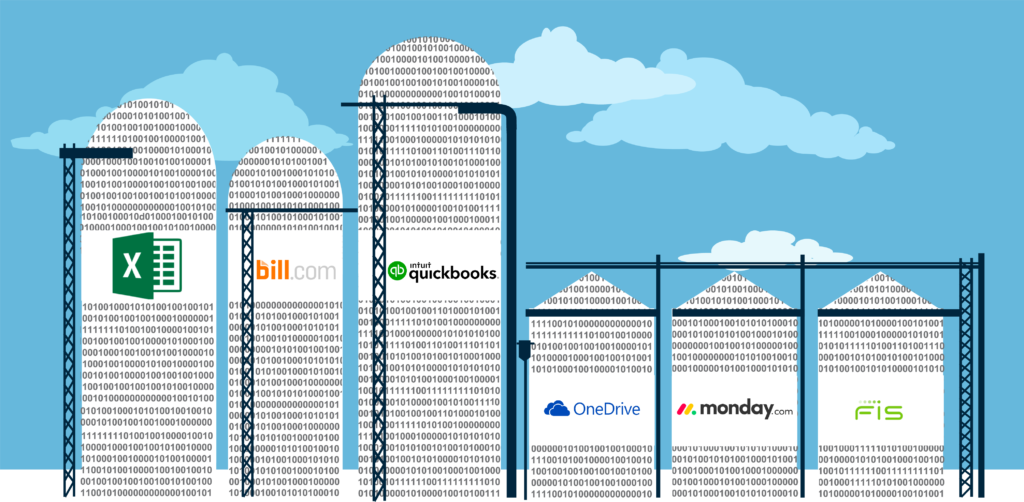
An economic downturn, or the cusp of one, is the perfect time to evaluate staff responsibilities and analyze where their time is spent. Very often, key personnel in a family office perform tasks they should not be doing. Yet, they are forced to execute mundane assignments because the key tools used by the office are siloed software applications, often programs like Microsoft Excel and QuickBooks. Personnel must make heroic manual efforts to aggregate and reconcile data from various systems to get things right, like transactions and reporting. They spend too much time worrying about the past when they should be looking forward, planning for what’s next.

Within a slipping economy, what would an office gain if its personnel used integrated family office software that maximizes operational efficiency, minimizes risk, and provides full transparency?

A family office typically has great, dedicated, and talented people. If one single, integrated platform could provide them with the enterprise-class processes, reporting, automation, and client delivery capabilities they need, they could spend more time delivering high-value services and counsel and thereby manage the family’s wealth more effectively.

This would revolutionize office management with a truly integrated platform, one that can facilitate the implementation of best practice business processes and workflows across multiple disciplines. It would enable a key goal: transparency, where “complexity is made simple” and where there is one reliable source of the truth, where data never leaves the system for analysis and can be sliced and diced as needed.

Less Time in the Past, More Time for the Future

When the burden of manually compiling reports is lifted from key personnel, staff members can focus on the true purpose and value of reporting—efficient, timely, and accurate reporting drives improved decision making. It provides clients with 24/7/365 anywhere access (mobile too) to reporting and secure communications. It facilitates staff providing high value-added work, together with significantly reduced cybersecurity vulnerability. The end result is what family members want: a highly engaged staff delivering excellent, timely reporting and service execution that is driven by automated, integrated best practices to provide best-in-class risk management.

What does this mean day-to-day for the family office staff? It means having all the information (documents PLUS accurate financial transaction information) in one place to do planning (cash, estate, tax, investment, insurance, etc.). It means a strategic solution from which the office has all the information to coordinate tasks and solve problems ahead of time. It means improved workflows and processes throughout the entire family office. And what about the family members? It means they have access to their wealth how and when they want it. Whether that be daily through a mobile app (like the next-gen will require), quarterly reports or something in between, flexible data and software caters to their needs without burdening the family office.

Too many family offices remain mired in manual operations that are cumbersome and inefficient and which lack transparency for effective decision-making and timely reporting. When thinking about a potential recession, offices need to take a 360-degree planning view. To be the best family office they can be, they need to focus on the opportunity to transform their operations using the right family office software. Turn an impending recession into a chance to restructure your family office and rethink the value you can bring to your clients.

AtlasFive® is the right family office software for family offices seeking to improve operational efficiency and advanced reporting. It provides the only truly integrated platform for single and multi-family offices. It revolutionizes the efficiency of managing and operating these offices, and it meets and often exceeds the changing needs and expectations of the ultra-high-net-worth families being served.

Why Family Office Technology Matters: The Good, the Bad, and the Ugly

Back in the old days, when the holy grail of an integrated investment ledger and general ledger was just a dream, a family office had to cobble a system together with the tools available. Many offices relied on the combination of Microsoft Excel and QuickBooks, or they looked to a wide variety of point-based functional technology products that had been sold into the family office space – after being developed for fund managers, hedge funds, private equity firms, etc. Not a great solution, but options were limited.

Why does this lack of family office-specific technology matter? With better technology, most family offices could be a better version of themselves and provide enhanced value to the families they serve. This elevation in value delivered would be seen in better efficiency, risk management, security, effectiveness, responsiveness, and a higher level of analytical services. 

Unfortunately, a large percentage of family offices are still stuck in the “old days.” They still use a combination of spreadsheets, an accounting software package, a tax system, a document and project management system, and maybe some type of portfolio management software. This siloed approach to technology results in a difficult life for office staff with many efficiency pain points and reduced value for the families they serve. Often, current generations do not even recognize how inefficient their processes are. They’ve executed tasks in this way for so long that they’ve become very efficient at being inefficient. This will not acceptable to succeeding generations as they will expect timely data, transparency, and efficient processes.

“This siloed approach to technology results in a difficult life for office staff with many efficiency pain points and reduced value for the families they serve.”

Examples of these inefficiencies include:

  • Many Systems of Record – including Excel!
  • Disparate systems – no integration
  • Multiple different user interfaces and operating methods
  • Complex data coming from multiple sources in various formats
  • Inability to maintain data integrity due to lack of control
  • Failure to integrate structured and unstructured data
  • Lack of documented procedures – no way to embed risk management, data security, and operational knowledge
  • Total dependence on key individuals (Single Point of Failure)

Thankfully, the “old days” are behind us because family office technology has advanced extraordinarily. Like every inflection point in history, this moment requires that change be embraced. Before spreadsheets, everyone relied on paper. The resistance to transitioning to spreadsheets was strong, but a different way of doing things was eventually accepted, and the process changed. Because the new course was simply better.

Suppose you take the concept of an integrated investment and general ledger system specific to the family office and expand on that approach. In that case, you get to the next giant leap forward for family offices. Now there is a technology platform that can simplify complexity, ensure transparency, and finally deliver one genuinely reliable source of the truth for all data. You get a strategic solution from which the office has all the information to coordinate tasks and solve problems ahead of time. You get dramatic operational improvements that enable the family office to be the best it can be.

This is a change that needs to be embraced by family offices. Because it’s better.

There was a time when the potential of Application Programming Interfaces (APIs) was seen as negating the need for an integrated platform.  The idea was that a variety of systems in a family office could be virtually integrated using APIs—a modularized approach with even the idea of a command center as its hub.  Conceptually it works. But in real life, this imperfect integration solves family office challenges with duct tape and recycled PVC piping. At its core, disparate software working in different ways and treating the data differently can never be better than a truly integrated, singular database. Furthermore, this modular approach inhibits the adoption—and promise—that AI is going to bring to family office technology. Without data all in one place, AI is simply unable to adequately make decisions and transform employees from monotonous doers to insightful reviewers.

AtlasFive® – Leading Family Offices Into the Future

AtlasFive is the platform for the family office of the future. Significant investment, product development, and rapid market adoption have made it the next-generation, holy grail for the holistic management and optimization of an efficient and forward-looking family office.

  • Provides the only truly integrated platform for single and multi-family offices
  • Revolutionizes the management and operation of single and multi-family offices
  • Facilitates the implementation of best practice workflows across multiple disciplines
  • Delivers a single source of truth so offices and their families can make decisions with greater confidence and speed

Meeting the Staffing Challenges of the Family Office of the Future

Building, retaining, empowering, and optimizing teams is perhaps one of the biggest challenges facing any organization. Without good people who have the knowledge and tools to excel at their jobs, businesses cannot perform.

In our current labor environment, roiled by the turbulence of the “Great Resignation,” the issue has become even more pressing for many organizations. This includes family offices, where people-based services are at the core of the value delivered. In fact, a recent article in Forbes anticipates that 82% of family office professionals will change jobs in 2022. That means in a five-person office, as many as 4 people could leave—creating uncertainty for the family the office serves and threatening the stability and institutional memory within the office itself.

Prioritize Employee Retainment

A 2017 study by the Society for Human Resource Management (SHRM) suggests that it’s far more cost-effective to retain employees than to recruit new people. The study found that “employers will need to spend the equivalent of six to nine months of an employee’s salary to find and train their replacement.” Another study suggests replacing an employee costs approximately 21% of their salary. In family offices, where work is specialized, these most likely are underestimated.

A more recent study, completed in November of 2021, examines employers’ most significant human resources issues. The bar chart below shows data from a wide range of businesses across the United States. Still, it also encapsulates the dilemma facing family offices around staffing availability and its impact on office costs.

SMB Group November 2021

As the Forbes article points out, family offices face the unique challenge of “competing with both technology giants and Private Equity firms for the best investment professionals.” Some employees will seek the clear career path and news-worthy projects that come with employment at a global institution, while other professionals prefer the opportunities for creativity and independence available to family office staff.

Family offices need to prioritize the optimization of teams and resources to ensure business continuity and long-term success. The more intelligently they invest in their people and the technologies and training that empower them, the better their productivity, profitability, and service quality.

Many sources indicate that a family office typically spends between 60 and 70 percent of its total operating costs on staff compensation and benefits. In other words, creating a working environment in which high-quality employees thrive and enjoy their work is essential to the success of any family office. It’s something family offices simply must get right.

The Relationship between Human Capital & Smart Technology

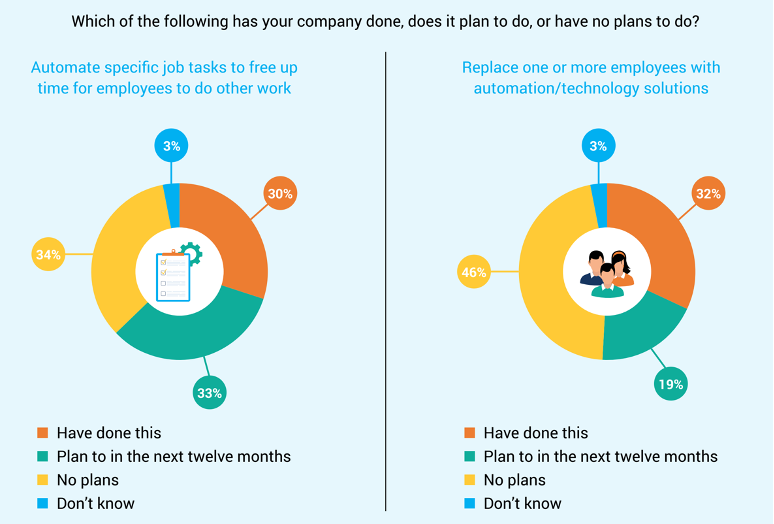
A critical ingredient for getting it correct is adopting technology solutions that empower people, and organizations, to be more successful and remove stress and costly and morale-deflating errors from the way they work. Technology can automate mundane and stress-producing tasks and allow highly trained employees to perform more gratifying and high-value work. It can also reduce the need to search for and hire additional employees as workloads and complexity grow. In addition, it can ensure that when employees do leave, they don’t take all their knowledge and capabilities with them.

Based on the same survey mentioned previously, the chart below demonstrates that businesses of all kinds are looking to technology to address the human capital dilemma.

Without a doubt, the best technology solutions for family offices and other businesses work in close combination with people. They empower people, not supersede them. The Harvard Business Review recently published an article, “Using Technology to Make Work More Human,” that looks at the future of people and technology working together. It has some great insights. (also see our blog on Rehumanizing the Family Office, where we go into great detail on this topic).

Here’s an excerpt:

“…we define “smart tech” as the AI and other advanced digital technologies that automate work by taking over tasks that only people could do previously. Smart tech makes decisions instead of and for people. While some feel that the interests of workers are at odds with smart tech — that humans and machines are in direct competition — we believe that this is a false dichotomy that’s uninformed, unimaginative, and just plain wrong. Smart tech and humans are not competing with one another; they are complimentary, but only when the tech is used well.”

The Family Office Solution: Purpose-Built Technology for a Successful, Fulfilling Future

Technology as an enabler to solve staffing problems requires an approach that complements the optimized skill set of humans in the family office. The technology should be focused on automating what can be automated, with people there for problem-solving and decision making. Automation in a family office requires a single source of data and a technology that facilitates seamless, transparent business processes and workflows—driven by embedded best-practice human knowledge.

The HBR points to an approach to achieving success:

Identify key pain points to determine the right use cases. These should focus on areas where smart tech can take over rote tasks that can streamline unmanageable workloads and reduce worker stress…

Choose the right smart tech for the job…

Create a virtuous cycle of testing, learning, and improving. Step carefully and slowly, because it can be difficult to undo the harms of automation once smart tech is in place.”

Family offices need a purpose-built technology platform that empowers staff to meet the specific needs of Ultra-High-Net-Worth (UHNW) clients—a system that reduces inefficiencies and allows staff to concentrate on things only humans can do. The right purpose-built system should understand and accommodate the unique structural complexities and dependencies of UHNW families; simplify, streamline, and verify both data entry and analysis across every entity and family stakeholder; and improve the quality of communications, reporting, and decision making.

The technology platform used should be one that understands the business, built by a family office, for a family office: A platform that enables the office to have a single source of data, and not the typical data silos, especially apparent in spreadsheets. It must have best practice business processes and workflows at its core in order, as HBR says, to have the correct use cases that can take over routine tasks and can also be the knowledge base for the “virtuous cycle of testing, learning, and improving.”

The right technology can solve the staffing dilemma we mentioned previously, but it can also position a family office to succeed in the future. As family offices evolve and shoulder more responsibilities for their clients, they must learn to scale effectively to be productive. However, the solution is more complex than simply implementing more technological processes into the office’s workflow. Instead, the family office must continue cultivating a relationship of trust with the clients, which requires a “people first” mindset.

Choosing the right technology for a family office enables its people to nurture client relationships and focus on long-term planning that aligns with the family’s goals—all while having confidence that the data is useful: accurate, relevant, and timely. The family office of the future will never look like a surreal science fiction room full of robots or computers emotionlessly processing data; the heart of the family office will always be the trustworthy staff. But when that staff is supported by the right technology and workflows are implemented so that computers do the routine manual tasks that repeatedly consume staff time – when we let technology do what it’s good at – we envision a family office that puts people’s skills first and enables personnel to achieve more than previously possible. Let people do what they’re good at and be amazed by what your office can achieve.

Meet with us to learn more.

Data Islands

Islands can be ideal vacation destinations. However, data islands (or data silos) cause significant problems when managing a family office. Created by using the wrong tools and work processes, data islands result in work duplication, reporting delays and errors, and families wondering about the true status of their affairs.

The solution may sound simple: Implement a unified system for tracking and reporting the affairs of Ultra High Net Worth Individuals — a data continent. But when it comes down to implementation, most family offices struggle to find a platform that can accommodate and unify the complex interrelationships of their client’s accounts and business affairs.

Most ultra-high-net-worth families have complicated financial arrangements, incorporating numerous family members, trusts, LLCs, partnerships, and other entities. To properly track and report on these “multi-entity” family structures, family office technology must have a comprehensive understanding of the complex relationships inherent in UHNWI finances and ownership.

When offices use a single-entity accounting software system instead of an integrated platform, each entity becomes an island of data. The office is left with multiple, separate instances of software and reports that require manual reconciliation before the office can present meaningful data to its clients. This is because each system has its own data nomenclature due to the individual master data models. The result of this consequential reconciliation process is that it is both time-consuming and error-prone.

Master Data & Meaningful Data

One of the biggest challenges in this isolated island approach involves master data: With hundreds of instances and multiple charts of accounts, merely changing a vendor’s details becomes a massive undertaking. The same changes need to be made across every entity involved. On the other hand, when there is just one data entry with a multi-entity system, master data changes are automatically shared and updated across all office data.

Simpler management of master data is a significant bonus for office personnel. It is also fundamental to meeting the needs of UHNWI clients. The family wants meaningful, current information that is easily accessible. It wants the ability to answer questions like “What am I worth?” and “How much cash do I have?” For a family office to be truly valuable to family members, it needs to provide consolidated, aggregated, accurate, and actionable, meaningful data for family members.

Using a spreadsheet—or multiple spreadsheets—to reconcile data and manage complexity is the wrong answer to the problem. Spreadsheets and single entity accounting software are simply one-dimensional and inadequate for representing a UHNWI’s entire net worth.

In contrast, a multi-entity accounting system provides a data query and reporting framework that consolidates and aggregates data across multiple entity groupings without using a spreadsheet. Family offices that transition to multi-entity accounting software see operational benefits. The risks inherent in the manual process of downloading and compiling data are minimized; the costs associated with the manual work of multiple instances are greatly reduced.

A Complex Tool for the Current Day

Single entity accounting software was created to bookkeep for a single entity, report on its financial state, and facilitate tax reporting. It is not a tool for the digital age of high-net-worth families, where building upon a relationship and servicing high-touch clients is most important. Family members expect an intuitive, accessible client portal that operates as a delivery mechanism for answering their questions and reporting. To be meaningful for clients, the portal must have the same multi-entity view—which is difficult to achieve without an integrated platform.

Inevitably, the financial life of a UHNWI gets more complex rather than more straightforward. Suppose the family office of the future is going to continue to provide relevant information and services to its clients. In that case, it must embrace a comprehensive, integrated technology platform purpose-built to handle this complexity—one that delivers greater accuracy, efficiency, transparency, risk control, and responsiveness to the family’s needs.